Travel Packages & Tours
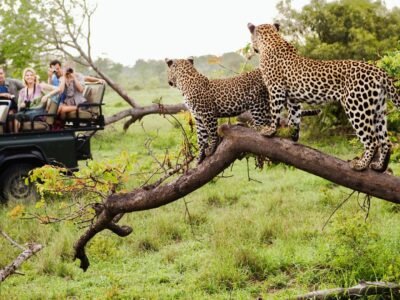
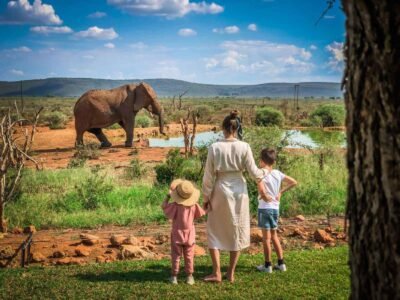
A Tanzania safari vacation offers many opportunities to explore the country’s attractions and natural wonders. With abundant wildlife and spectacular landscapes, your trip to Tanzania will be filled with unforgettable memories.
Here Africa offers popular safari packages that allow you to experience the very best of Tanzania and the rest of Africa.
If you’re visiting multiple parks and reserves in Tanzania, you have two options for getting around: driving or flying. However, due to the poor condition and lack of markings on most wilderness area roads, self-driving is not recommended. Tour operators can provide a driver who will also act as an informal guide. Alternatively, you can arrange flights to your destination and use a car and driver supplied by your accommodation. Driving is on the left-hand side of the road.
For flights, Precision Air offers regular service, primarily via Dar es Salaam, Kilimanjaro, or Zanzibar, to major towns and other destinations in East Africa and beyond. Additionally, most national parks and some high-end lodges have airstrips. Coastal Air operates flights between these airstrips and the main airports on the mainland and the islands of Zanzibar, Pemba, and Mafia. ZanAir provides frequent connections between Zanzibar, Pemba, and the mainland.
Most camps, lodges, or hotels cater specifically to tourists and serve Western-style food, varying in quality, but most are excellent. Game lodges typically offer a daily set menu with a limited selection. If you are a vegetarian or have other specific dietary requirements, it’s advisable to have your tour operator communicate this in advance. First-time visitors to Africa might take note that most game lodges in and around the national parks have isolated locations, and driving within the parks is neither permitted nor advisable after dark, so that there is no realistic alternative to eating at your lodge.
Tap water in Tanzania is generally not safe to drink, and most travelers stick to mineral water. Filtered and bottled water can be difficult to find outside of main towns, so it’s wise to stock up. Luckily, most camps, lodges, and hotels have bottled water readily available.
Due to its large size and location just south of the equator, Tanzania experiences significant climate variations across the country. Generally, the main rainy season, or the ‘long rains’, lasts from March to May. Afternoon tropical downpours are common, becoming heavier and more predictable near the coast and on the islands. The humidity is high and daily temperatures reach the low-mid 30 degrees Celsius.
The long dry season lasts throughout June, July, August, September, and October where rainfall is unusual, even on the islands. Temperatures vary hugely with altitude and location, but usually with a fine, clear sky and sunny weather, it’s a great time to visit Tanzania. During November and December, there’s another rainy season: known as the ‘short rains’, these are much lighter than the main rains and less predictable.
If it has rained during the short rains, then the months of January and February are expected to be dry. These months are Tanzania’s ‘short dry season’, before starting to rain again early in March.
It never gets too cold in Tanzania so lightweight clothing, preferably cotton or linen, is recommended. While on a game-viewing safari, avoid brightly colored clothing, and stick to whites, beiges, khakis, and browns. There may be long days sitting in safari vehicles, so it is advisable to wear light comfortable clothing such as short-sleeved shirts and cotton/linen trousers or shorts. Denim will become too hot and extremely uncomfortable. Walking shoes and socks will be required.
The evenings will be chilly, so long-sleeved shirts and trousers should be worn. A sweater may be needed. These will also prevent you from being bitten by insects. A hat should be worn at all times outside. The sun may sometimes not feel hot, but skin can still easily burn, even when it is cloudy and overcast.
When visiting Zanzibar or any coastal town don’t forget to take a swimsuit, as it is invariably warm. Ladies are recommended to wear cotton skirts, blouses, and dresses. Sandals are a must for this environment! On the beaches and within the confines of hotels, normal swimwear is acceptable but nudity is not.
As over a third of the population in Tanzania is Muslim, it is poor etiquette for women to walk around in public displaying their legs and shoulders. Remember to dress modestly as short shorts, miniskirts, vests, and tank tops will be frowned upon.
Tanzania has good Internet Service Providers with email and internet services offered by many hotels and lodges (free / paid). In most towns, there are plenty of private business centers and cyber cafes offering email and internet access, although the speeds might be somewhat slower than what you are used to.
The electricity supply in Tanzania is 220/240 volts at 50Hz. Plugs are 3 point square (UK Type). Adapters are available at major airports.
The best time to visit Tanzania depends on your preferred activities and interests. While there are no drastic seasonal shifts like winter and summer, Tanzania does experience distinct wet and dry seasons that can impact your experience.
The best time for a Tanzania wildlife safari is during the dry season, from late June to October. The huge herds of animals in the Great Migration reach the northern Serengeti in July and then proceed over the Grumeti River towards Kenya and the plains of the Masai Mara. Between late October and December, the millions of animals slowly start making their way back to the Serengeti, with the first rains expected in January. The wildebeest calving season occurs in January and February, another safari spectacle not to be missed.
When booking a vacation to Tanzania, be aware of the country’s position just south of the equator and the presence of two rainy seasons. The short rains occur between late October and late December. While unpredictable, they shouldn’t hinder your safari experience.
The long rains in Tanzania usually occur between March and May. Travelers can expect heavy downpours, high humidity, and temperatures above 30 degrees Celsius. This can affect your travel plans, as some attractions, especially in Zanzibar, may be closed during this time.
Package Tours
Package Tours
© 2025 Here Africa. All Rights Reserved.